
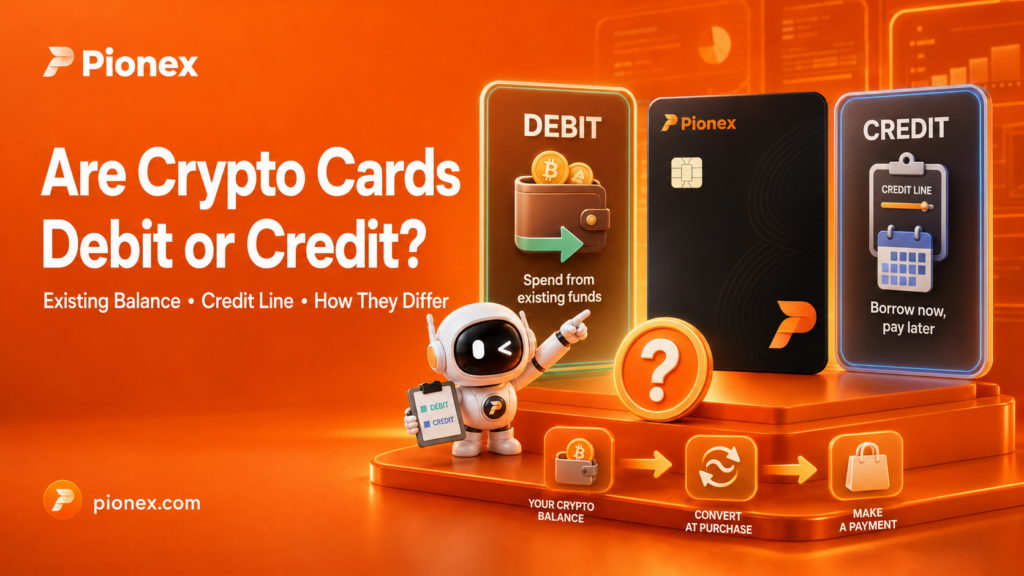
Almost every crypto card on the market today is structurally a debit card, not a credit card, even though a few blur the line with credit-like features. The distinction isn’t just semantics — it determines whether you can go into debt using one, whether it affects your credit score, and how the issuer manages risk.
Contents
Why crypto cards are built as debit cards
A credit card lets you spend money you don’t have yet and pay it back later, with interest if you carry a balance. That model requires the issuer to underwrite you, assess creditworthiness, and take on default risk. Crypto platforms generally don’t want that exposure, and regulators in most countries would require a full lending license to offer it.
A debit card, by contrast, only lets you spend what’s already sitting in the linked account. That’s exactly how crypto cards work: you fund a card account with crypto or stablecoins first, and the card can only spend what’s actually there. There’s no credit line, no borrowing, and no possibility of spending money you haven’t already converted or deposited.
This is also why crypto card applications rarely involve the kind of credit checks you’d expect for a credit card. The issuer isn’t taking on repayment risk, so there’s nothing to underwrite in that sense — though identity verification (KYC) is still required for compliance reasons, which is a separate process from a credit check.
Where the line gets blurry
A handful of crypto cards advertise “credit-like” features such as spending limits framed as a credit line, or rewards structures that resemble traditional credit card perks (points, cashback tiers, sign-up bonuses). This is largely a marketing and product-design choice rather than a change in the underlying mechanics. Unless a card explicitly states it extends a revolving line of credit that you can carry a balance on and get charged interest for not repaying, treat it as a debit product regardless of how the rewards are marketed.
Some cards also mention an “APR” in their terms. On a genuine debit-model crypto card, this typically refers to a specific credit-adjacent feature (like a crypto-backed loan or credit line offered as a separate product alongside the card) rather than the card itself functioning as revolving credit. Worth reading the specific terms rather than assuming.
Functionally, this makes most crypto cards closer to a prepaid card. The card balance is funded with cryptocurrency or stablecoins before a merchant payment is approved, so spending is limited to available funds.
What this means practically
| Debit-model crypto card | Traditional credit card | |
|---|---|---|
| Spending source | Pre-funded balance | Credit line from issuer |
| Can you overspend? | No — declines if insufficient balance | Yes, up to your limit |
| Interest charges | None (no borrowing) | Yes, if balance isn’t paid in full |
| Credit check required | Typically no | Yes |
| Affects credit score | Typically no | Yes, both positively and negatively |
That last row matters if you are deciding between a crypto card and a traditional credit card, because debit-model crypto cards generally do not build a credit history.
Why this matters for how you use one
Because it’s a debit product, a crypto card can’t get you into the kind of revolving debt a credit card can. The tradeoff is that it also doesn’t build the credit history that responsible credit card use typically does, since there’s no borrowing activity for a credit bureau to track. If building credit history is part of your financial strategy, a crypto card isn’t a substitute for a credit card in that specific respect, even though it functions like one at checkout.
For the specifics of how funding, spending limits, and card management work on one particular card, see How Does Pionex Card Work? and the full breakdown in the Pionex Card Review.
Frequently asked questions
Can you go into debt using a crypto card?
No, in most cases. Crypto cards operate on a debit model where spending is limited to a pre-funded balance, so there’s no credit line to overspend against.
Do crypto cards require a credit check?
Typically no, because the issuer isn’t extending credit or taking on repayment risk. Identity verification (KYC) is still required, but that’s a separate compliance process from a credit check.
Do crypto cards help build credit history?
Generally no, since there’s no borrowing activity for a credit bureau to report. Debit-model cards typically don’t affect credit scores either positively or negatively.
