
Contents
- 1 What is TSLL?
- 2 Is TSLL available to trade with USDT?
- 3 TSLL vs TSLA: what is the difference?
- 4 How does a 2x Tesla ETF work?
- 5 Why TSLL can behave differently over time
- 6 Why traders watch TSLL
- 7 What to check before trading TSLL with USDT
- 8 TSLL risks
- 9 TSLL vs other Tesla-linked products
- 10 Is TSLL the same as Tesla stock?
- 11 Frequently asked questions
- 12 In Conclusion
What is TSLL?
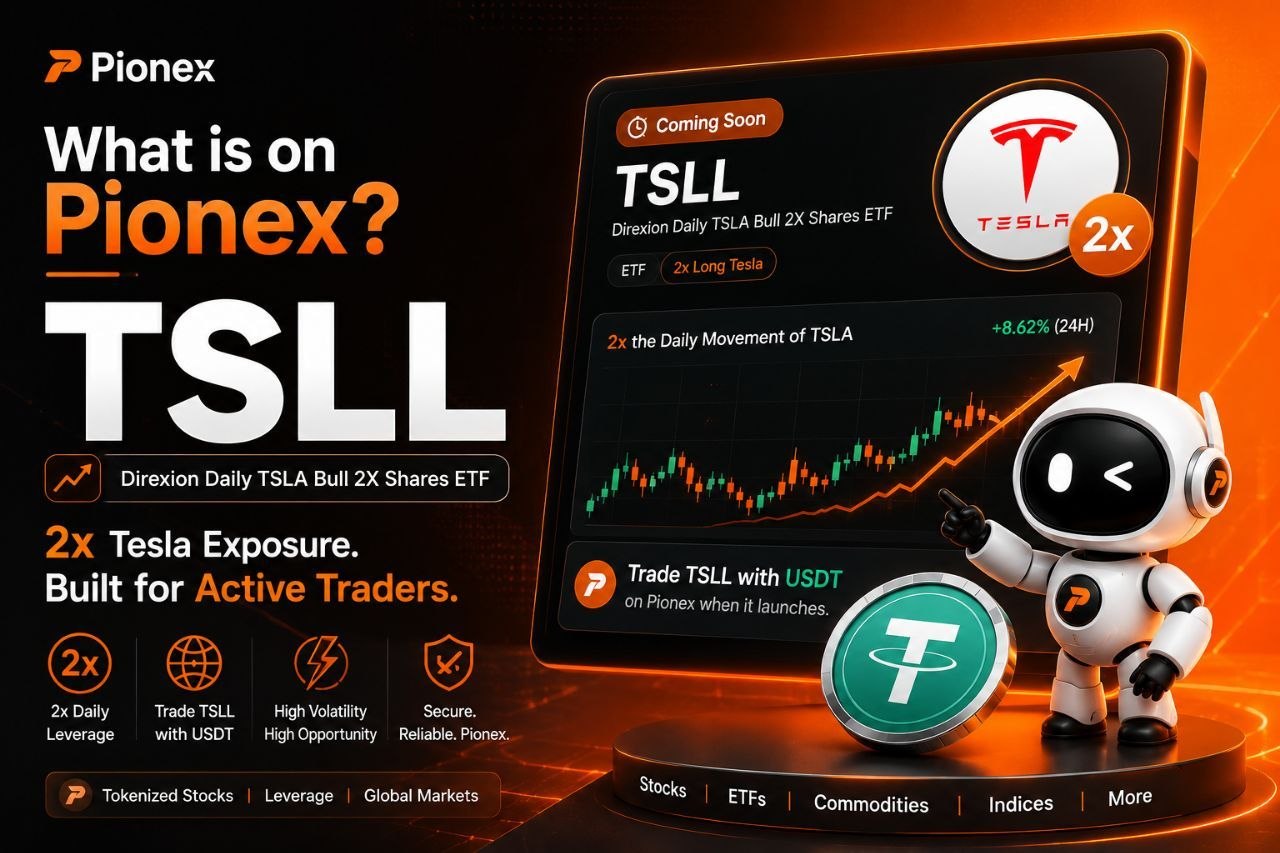
TSLL is the Direxion Daily TSLA Bull 2X ETF, a leveraged ETF designed to deliver 200% of Tesla’s daily performance before fees and expenses. In simple terms, TSLL aims to move about twice as much as Tesla stock in a single trading day.
If Tesla rises 1% in a day, TSLL is designed to rise about 2% before fees and tracking differences. If Tesla falls 1% in a day, TSLL is designed to fall about 2%.
TSLL is not the same as Tesla stock. Tesla trades under the ticker TSLA and gives direct exposure to Tesla shares. TSLL is a leveraged ETF built for traders who want amplified daily exposure to Tesla’s price movement.
Because TSLL uses leverage and resets daily, it can behave differently from Tesla over longer periods. It can also lose value faster when Tesla moves against the trade.
Is TSLL available to trade with USDT?
TSLL is being prepared for addition to Pionex and is expected to be available shortly. Once the market opens, users will be able to search TSLL on Pionex and trade supported TSLL-linked exposure with USDT.
Before placing a trade, check the live market details inside Pionex. This includes whether TSLL is offered as spot, futures, or another tokenized stock-linked product, along with liquidity, spread, fees, trading hours, regional availability, and product terms.
This matters because TSLL is already a leveraged ETF. It is designed to amplify Tesla’s daily price movement, so it should not be treated like ordinary Tesla stock.
TSLL vs TSLA: what is the difference?
TSLA is Tesla’s common stock. TSLL is a leveraged ETF that aims to deliver 2x Tesla’s daily performance.
| Feature | TSLA | TSLL |
| Full name | Tesla Inc. common stock | Direxion Daily TSLA Bull 2X ETF |
| Product type | Individual stock | Leveraged single-stock ETF |
| Exposure | Direct Tesla stock exposure | 2x daily Tesla exposure |
| Built-in leverage | No | Yes, 2x daily leverage |
| Best suited for | Tesla investors and traders | Active traders seeking amplified daily Tesla movement |
| Main risk | Tesla stock volatility | Tesla volatility plus leverage and compounding risk |
| Holding style | Can be used for short-term or long-term exposure | Designed around daily performance |
The key point is simple: TSLL does not aim to deliver twice Tesla’s long-term return. It aims to deliver twice Tesla’s daily return.
That daily reset is what makes TSLL more complex than Tesla stock.
How does a 2x Tesla ETF work?
A 2x Tesla ETF uses financial instruments to target twice Tesla’s daily price movement. Direxion says TSLL seeks daily leveraged investment results equal to 200% of TSLA’s daily performance before fees and expenses.
Example:
If Tesla rises 3% in one trading day, TSLL is designed to rise about 6% before fees and tracking differences.
If Tesla falls 3% in one trading day, TSLL is designed to fall about 6%.
This daily leverage can be useful for short-term traders who want stronger exposure to Tesla’s price movement. But the same leverage also increases risk.
A small move in Tesla can become a larger move in TSLL. This is why TSLL is usually more suitable for users who understand short-term trading, volatility, and leveraged ETF behavior.
Why TSLL can behave differently over time
TSLL resets its exposure daily. Because of this, TSLL’s return over several days may not equal exactly 2x Tesla’s total return over the same period.
This happens because of compounding.
For example:
Tesla rises 10% on day one, then falls 10% on day two. Tesla does not return exactly to its starting price.
With TSLL, the daily moves are amplified. A 20% gain followed by a 20% loss creates a larger drag.
This effect becomes more noticeable when Tesla is volatile. In choppy markets, TSLL can lose value even when Tesla’s price ends near where it started.
Direxion warns that leveraged and inverse ETFs pursue daily objectives and should not be expected to track the underlying security over periods longer than one day.
Why traders watch TSLL
TSLL gets attention because Tesla is one of the most actively followed stocks in the market.
Tesla is tied to several major themes:
- electric vehicles
- autonomous driving
- battery technology
- robotics
- AI
- retail trading momentum
- Elon Musk-related news
- earnings volatility
TSLL gives traders a way to express a bullish short-term view on Tesla with amplified exposure.
That can make TSLL useful during strong Tesla momentum, earnings reactions, major product news, or high-volume trading periods.
The trade-off is higher risk. If Tesla moves down, TSLL can fall faster than Tesla stock.
See also: How to Trade Tokenized Tesla, Apple & NVIDIA Stocks with USDT on Pionex (2026 Guide)
What to check before trading TSLL with USDT
Before trading TSLL with USDT, check the product carefully.
1. Confirm availability
Search TSLL on Pionex. If no result appears, the market may not be open yet.
2. Check the product type
Make sure you know whether you are trading spot, futures, or another tokenized stock-linked product.
3. Review liquidity
Low liquidity can lead to wider spreads and weaker execution prices.
4. Understand the leverage
TSLL already targets 2x Tesla’s daily movement. If the Pionex product adds another layer of leverage, the risk can become much higher.
5. Check fees
Fees can affect returns, especially for short-term or frequent trading.
6. Review trading hours
Tokenized stock markets may not always follow the same schedule as U.S. equity markets.
7. Read product terms
TSLL-linked exposure on a crypto exchange may not be the same as holding the ETF directly through a traditional broker.
TSLL risks
Leverage risk
TSLL magnifies Tesla’s daily price movement. This can increase gains when Tesla rises, but it also increases losses when Tesla falls.
Tesla concentration risk
TSLL is tied to one stock: Tesla. If Tesla drops sharply, TSLL can drop much faster.
Daily reset risk
TSLL targets daily performance. Over longer periods, returns can differ from a simple 2x version of Tesla’s total move.
Volatility risk
Tesla is already volatile. Adding 2x daily leverage makes TSLL even more sensitive to price swings.
Liquidity risk
If a TSLL-linked market has low liquidity, users may face wider spreads.
Product structure risk
A tokenized or exchange-listed TSLL-linked product may not provide the same rights, terms, or protections as holding the ETF directly through a traditional brokerage account.
TSLL vs other Tesla-linked products
| Product | What it gives exposure to | Risk level |
| TSLA | Tesla common stock | High |
| TSLL | 2x daily bullish Tesla ETF | Higher |
| TSLS | Inverse Tesla ETF exposure | High and direction-sensitive |
| Tesla tokenized stock | Tesla-linked price exposure through crypto markets | Depends on product terms |
| Tesla options | Contract-based leveraged exposure | High and complex |
TSLL is easier to understand than options, but riskier than holding Tesla stock because it uses leverage and resets daily.
Is TSLL the same as Tesla stock?
No. TSLL is not the same as Tesla stock. Tesla stock trades under the ticker TSLA and gives direct exposure to Tesla shares. TSLL is the Direxion Daily TSLA Bull 2X ETF, which aims to deliver 200% of Tesla’s daily performance before fees and expenses. TSLL is designed for short-term leveraged exposure, not simple long-term Tesla ownership.
Frequently asked questions
What is TSLL?
TSLL is the Direxion Daily TSLA Bull 2X ETF. It is a leveraged ETF designed to deliver 200% of Tesla’s daily performance before fees and expenses.
Is TSLL the same as Tesla stock?
No. Tesla stock trades under the ticker TSLA. TSLL is a leveraged ETF that aims to deliver 2x Tesla’s daily performance.
What does 2x Tesla ETF mean?
A 2x Tesla ETF aims to move twice as much as Tesla in a single trading day before fees and expenses. If Tesla rises 1% in a day, TSLL targets about +2%. If Tesla falls 1%, TSLL targets about -2%.
Is TSLL good for long-term holding?
TSLL is designed around a daily objective. It may not behave like 2x Tesla over longer periods because of daily resets, volatility, fees, and compounding.
Can I trade TSLL with USDT?
If TSLL becomes available on Pionex, users may be able to trade TSLL-linked exposure with USDT through supported tokenized stock markets. Users should confirm live availability on the Pionex app or website before trading.
Is TSLL risky?
Yes. TSLL is risky because it uses leverage tied to Tesla’s daily performance. It can lose value faster than Tesla stock when Tesla moves against the position.
Why does TSLL not always equal 2x Tesla over time?
TSLL targets 2x Tesla’s daily performance, not long-term performance. Daily resets and compounding can cause TSLL’s multi-day return to differ from a simple 2x version of Tesla’s total move.
Who might trade TSLL?
TSLL may appeal to active traders who understand Tesla volatility, leveraged ETFs, daily resets, and short-term risk management.
What should I check before trading TSLL with USDT?
Check whether TSLL is live on Pionex, the product type, liquidity, spread, fees, trading hours, regional availability, and the risks of leveraged ETF exposure.
In Conclusion
TSLL is a leveraged Tesla ETF built for traders who want amplified daily exposure to Tesla’s price movement.
It is not the same as Tesla stock. It is also not designed to simply double Tesla’s long-term return. TSLL targets 2x Tesla’s daily performance, which makes it more sensitive to volatility, compounding, and short-term market swings.
As soon as TSLL becomes available on Pionex, users will be able to trade TSLL-linked exposure with USDT. Before trading, users should confirm availability, understand the product type, check liquidity, and review the risks of leveraged ETF exposure.
